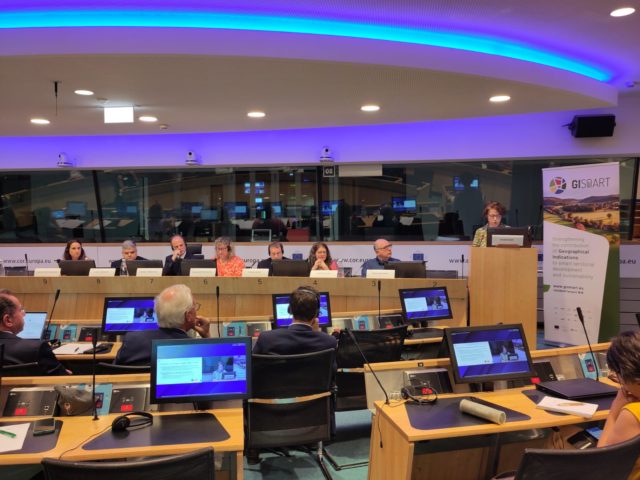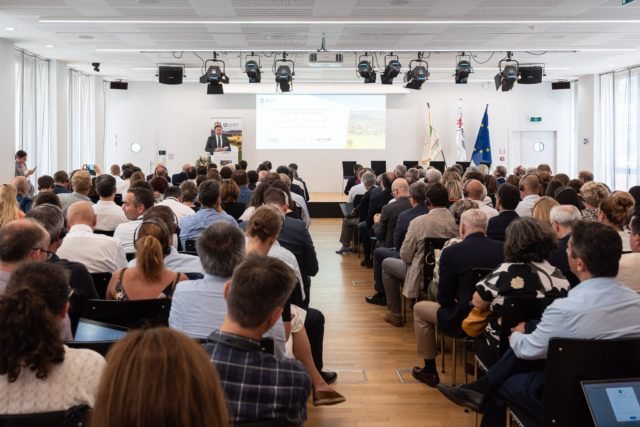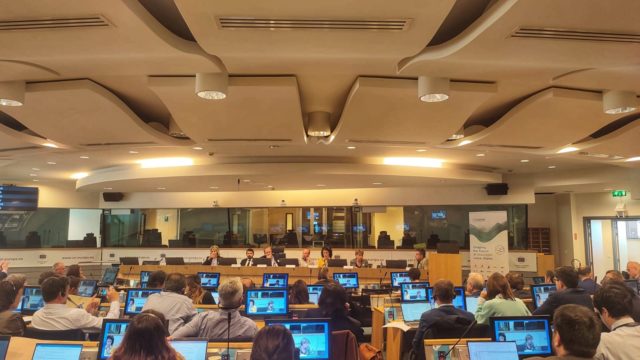
The Lombardia Region (Italy) hosted AREPO’s second General Assembly of 2026 in the historic city of Mantova (Mantua).
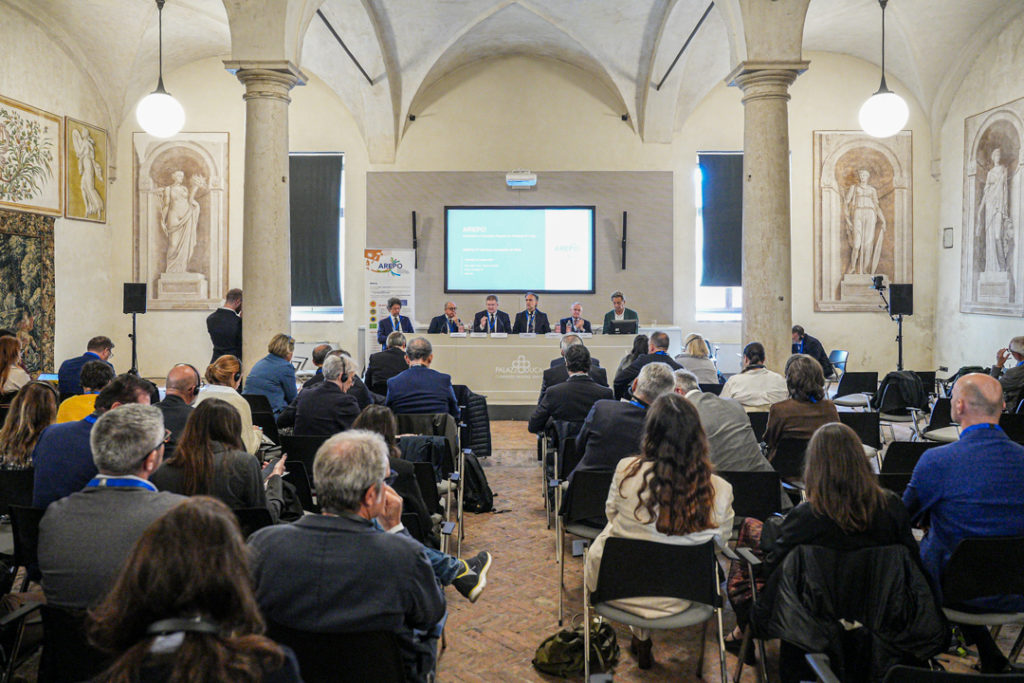
The Assembly, held at Palazzo Ducale on 15 October, brought together representatives of member Regions and GI producers to review the Association’s activities, discuss the future of EU Geographical Indications (GIs) and take part in the first GI SMART dissemination webinar for regional actors. The event continued on 16 October with a technical visit dedicated to Grana Padano PDO production.
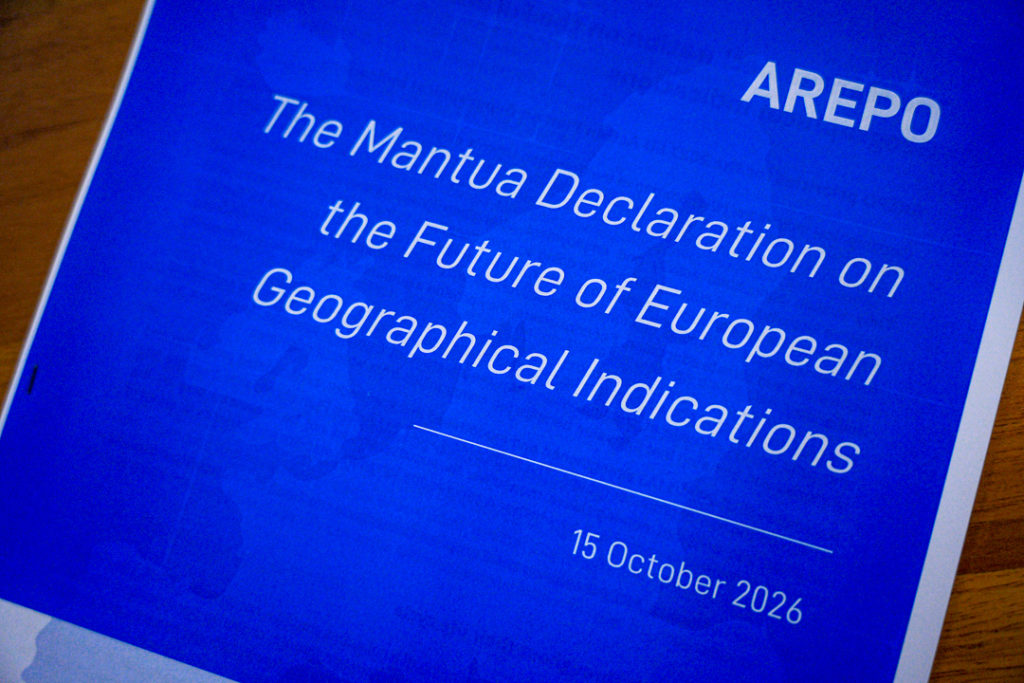
AREPO adopts the Mantua Declaration on GIs
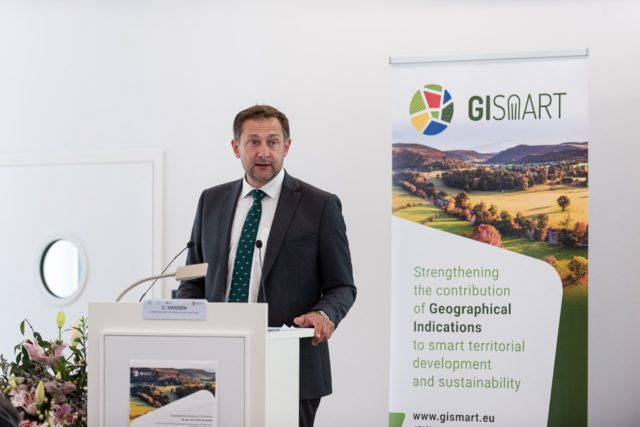
At the centre of the day was the adoption of the Mantua Declaration on the Future of European Geographical Indications, setting out AREPO’s priorities for the forthcoming EU initiative on GIs announced for 2027 by Commissioner for Agriculture and Food, Christophe Hansen. Accompanied by a technical annex with policy recommendations, the Declaration calls for GI protection to deliver tangible economic benefits for producers and rural territories.
Building on Regulation (EU) 2024/1143, the Declaration calls for support beyond registration, enabling GIs and their producer groups to create lasting value, develop markets and adapt to future challenges. Accompanied by a technical annex with policy recommendations, it sets out six priorities:
- Support GIs throughout their life cycle, from emergence and registration to collective consolidation, market development and adaptation.
- Turn protection into fair economic value, helping producer groups develop collective strategies, defend registered names and strengthen producers’ position in the value chain.
- Bring GIs into citizens’ daily lives, through a coherent European communication and promotion strategy that connects products with their producers and territories.
- Prepare GI value chains for the future, supporting generational renewal, skills, research, innovation and climate adaptation while safeguarding biodiversity and production capacity.
- Recognise Regions as implementation and governance partners, involving them in the design, delivery and review of the Action Plan through structured multilevel dialogue.
- Build a coherent, evidence-based delivery framework, with clear objectives, defined responsibilities and regular review to assess whether GIs create value and sustain participation in their territories.
AREPO calls for Member States, Regions and producer groups to be actively involved in shaping and implementing future initiatives. The Declaration also invites the European Parliament, the Council and Member States to support the Action Plan’s objectives and contribute to their implementation within their respective competences.
Click here to read the Mantua Declaration!
The future of EU Geographical Indications
Moderated by AREPO Secretary General, Laurent Gomez, the discussion centred on support for GIs beyond their registration, stronger producer organisations and a greater role for Regions in shaping and implementing the forthcoming EU Action Plan on GIs.
AREPO President Alessandro Beduschi, Regional Minister for Agriculture, Food Sovereignty and Forestry of Lombardia Region, presented the key priorities of the Mantua Declaration, developed by AREPO through consultation with its member Regions and producer groups, followed by a dedicated technical meeting. The document positions GIs as a strategic component of EU agriculture and rural development, linking agricultural competitiveness and producer incomes with generational renewal and climate resilience. Diego Canga Fano, Deputy Director-General at the European Commission’s DG AGRI, welcomed the Declaration as a timely contribution to the preparation of a non-legislative action plan, emphasising that the priority is to implement the existing regulatory framework while ensuring regulatory stability.
The discussion highlighted that effective implementation depends on strong producer organisations and closer cooperation across territories. Paolo De Castro, President of Nomisma and former rapporteur for the European Parliament on Geographical Indications, emphasised the economic opportunities created by the link between products and local identity. Building on this perspective, Riccardo Deserti, President of oriGIn and Director of the Parmigiano Reggiano Cheese Consortium, advocated exchanges of organisational expertise between countries and stronger international cooperation. Cesare Baldrighi, President of oriGIn Italia brought this collective approach to the institutional level, calling for closer coordination between producer networks and Regions to strengthen their contribution to European policymaking.
Fair returns for producers also connected the debate on protection, trade and promotion. MEP Carlo Fidanza identified effective action against imitation, export opportunities and administrative simplification as key priorities.
Alongside international opportunities, the discussion emphasised the need to bring GIs closer to European citizens. AREPO Vice-President César Saldaña highlighted the importance of explaining how these products sustain rural livelihoods and communities. Public food procurement and the proposed travelling GI exhibition were discussed as practical avenues for increasing awareness and connecting consumers with producers and their territories.
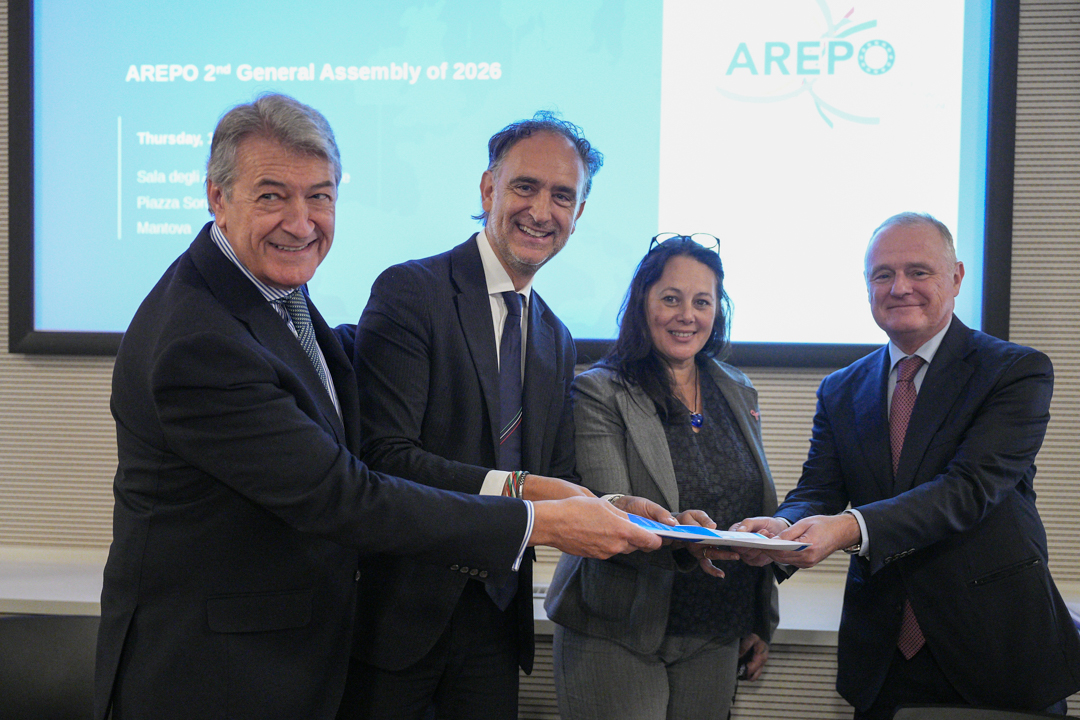
Italian Agriculture Minister, Francesco Lollobrigida, concluded the session by stressing the importance of coordinated institutional support, investment and promotion to ensure that the distinctive value of GI production is recognised in the market. Then, President Beduschi signed the Mantua Declaration and formally presented it to the participating institutional representatives as AREPO’s contribution to the forthcoming EU Action Plan on GIs.
During the lunch break, participants joined guided tours of the “Camera degli Sposi” at Palazzo Ducale, renowned for its frescoes by Andrea Mantegna.
The first GI SMART dissemination webinar for regional actors
The afternoon featured the first GI SMART dissemination webinar for regional actors, marking the fifth meeting of the project’s European Multi-Actor Platform (EU MAP). Held in hybrid format, the session launched the GI SMART Regional Exchange Series, bringing research findings and regional experience together to explore how GIs can assess and strengthen their sustainability.
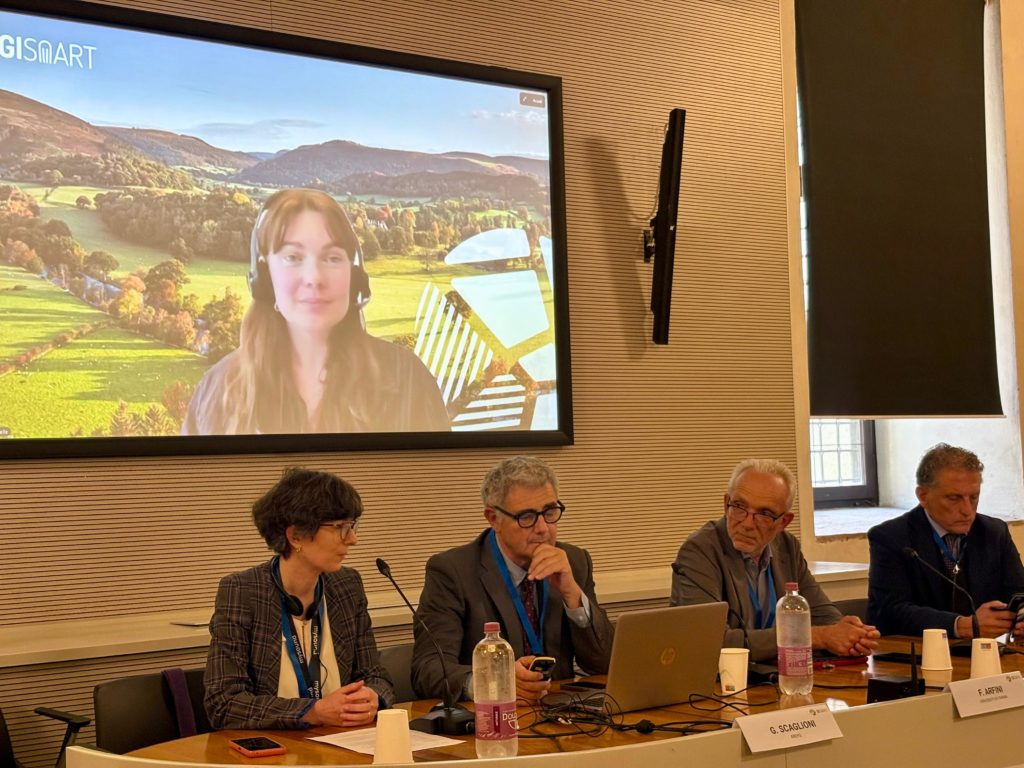
Following an introduction by Giulia Scaglioni (AREPO) and Valentine Neirinck-Fauvelle (Euromontana), Prof. Filippo Arfini (University of Parma) explored how to assess GI sustainability using measurable indicators alongside stakeholder perceptions. Preliminary survey findings highlighted strong recognition of GIs’ cultural contribution, while identifying women’s participation and generational renewal as areas requiring greater attention. Gaps in data availability and representativeness also emerged as obstacles to assessing the economic, environmental and social performance of GI value chains.
The discussion then turned to Tuscany’s case study in supporting GI producer groups to develop sustainability reports. Gennaro Giliberti (Tuscany Region) and Prof. Giovanni Belletti (University of Florence) illustrated how cooperation between public authorities, researchers and producer groups can translate sustainability objectives into indicators adapted to each production system. The approach aims to help producers identify improvements and demonstrate the value their products generate for local communities and territories.
Further information are available at the following link.
Certified Quality Agricultural Production Systems in Lombardia
The second thematic session featured Prof. Gabriele Canali (Università Cattolica del Sacro Cuore) who presented the analysis that Vsafe’s, a university spin-off specialising in sustainability in the agri-food and environmental sectors, conducted for Regione Lombardia on certified agricultural quality systems, covering PDOs, PGIs, organic production and integrated production. The work brings together information from control bodies, producer consortia and national and regional databases to build a consistent basis for analysis over time.
Prof. Canali explained that differences in data collection and reporting can limit comparability, even for production volumes and economic value. Harmonising these sources helps assess participation in certification schemes, production trends and access to CAP support. Further refinement of the database will strengthen the evidence available to regional policymakers, supporting the assessment of certification schemes and future policy choices.
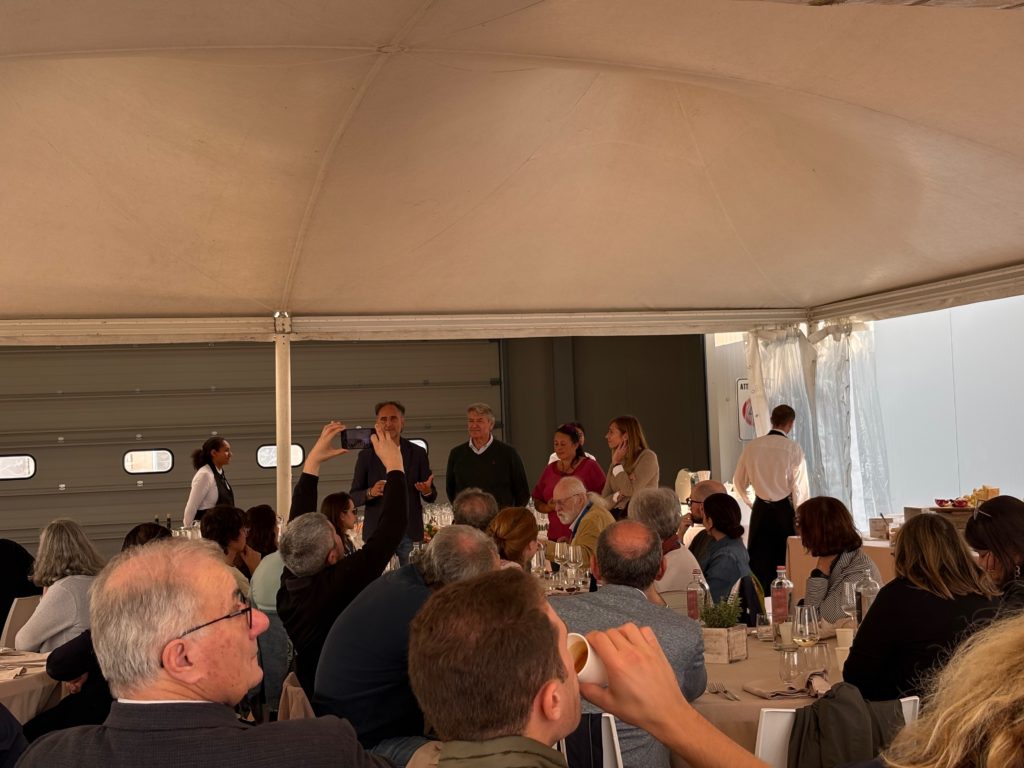
At the end of the day’s sessions, participants headed to Palazzo Te for the presentation of the EXPO GI project, planned for 2027 in Desenzano del Garda, followed by an official dinner featuring typical products from Lombardy, the host region .
Technical visit and regional GI production
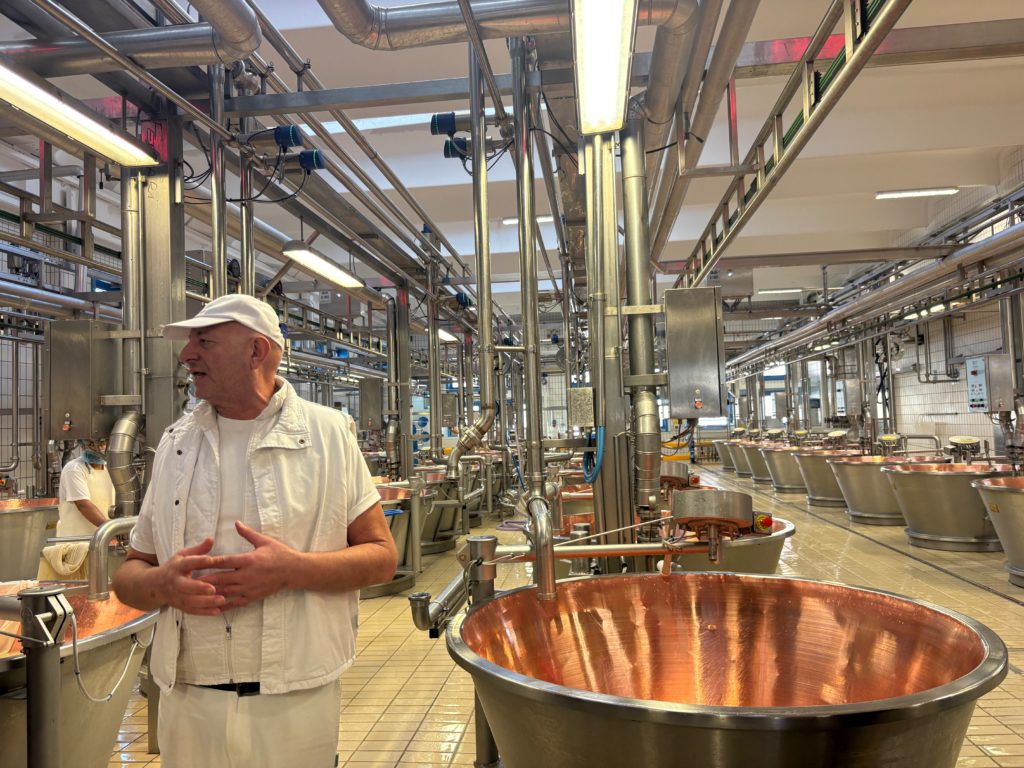
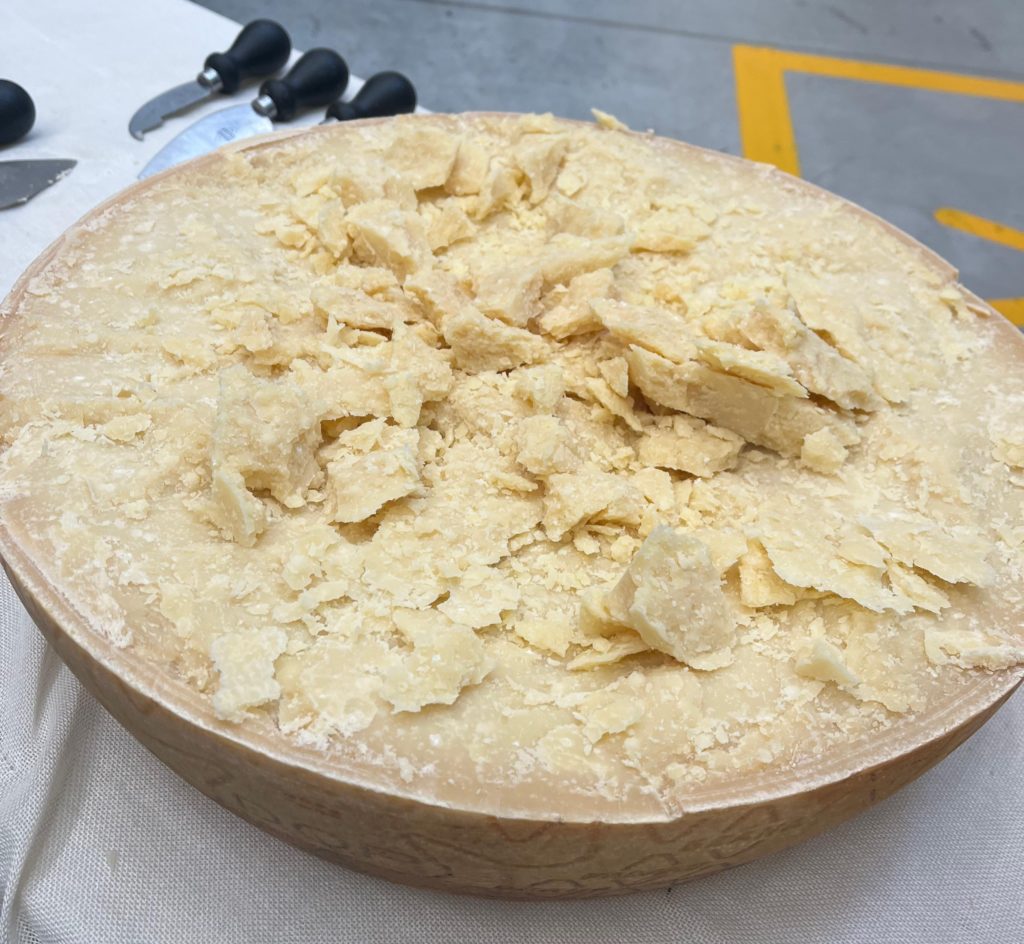
The programme for 16 October included a short boat journey to see Mantova from Mincio rivere, followed by a visit to the “Caseificio Europeo” in Bagnolo San Vito, where participants had the opportunity to observe and learn more about Grana Padano PDO production and to discover the product through a tasting.
Maggiori informazioni :
AREPO Mantua Declaration & Technical Annex
FR_AREPO Assemblea Generale_Comunicato Stampa_Mantova Declaration
IT_AREPO Assemblea Generale_Comunicato Stampa_Mantova Declaration
ES_AREPO Asamblea General_Comunicado de Prensa_Mantova Declaration
EN_AREPO General Assembly_Press Release_Mantova Declaration