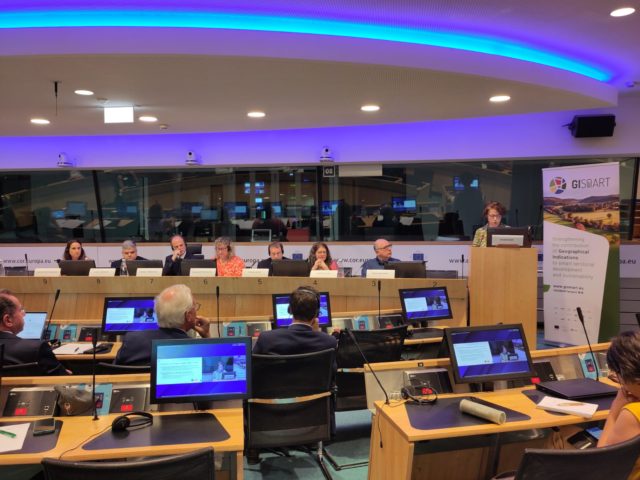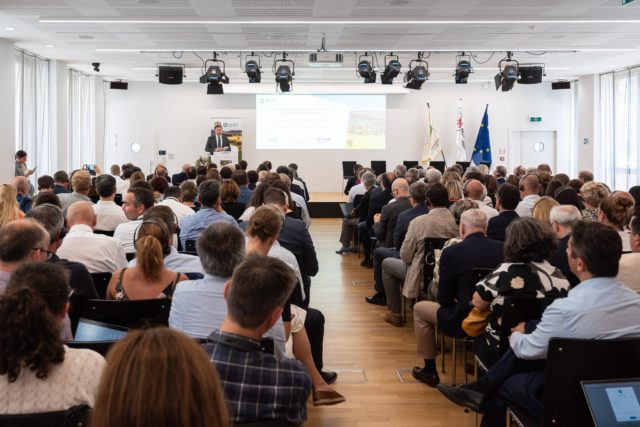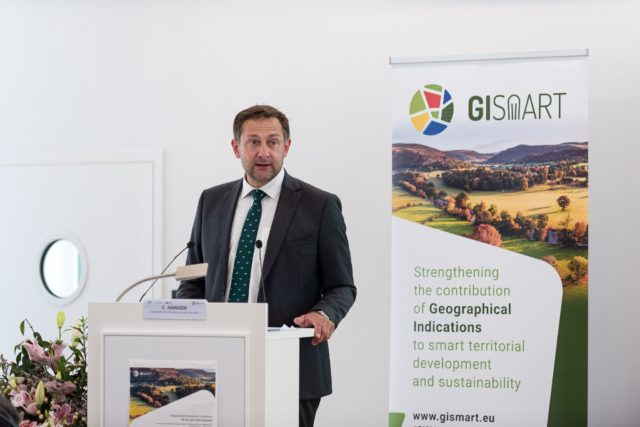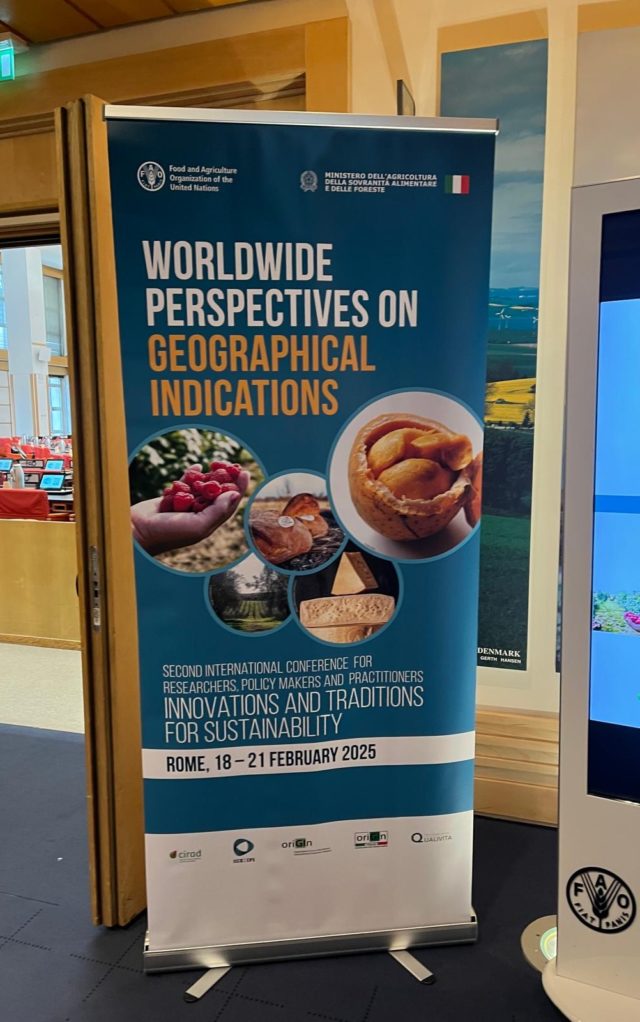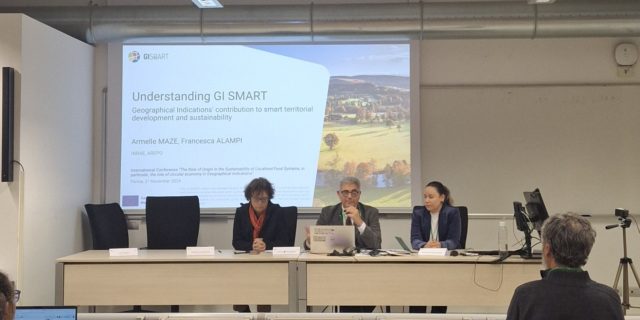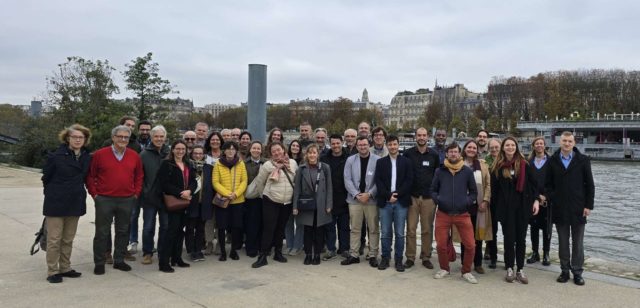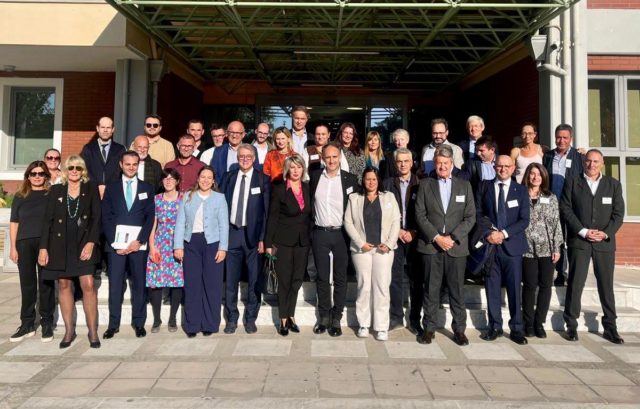

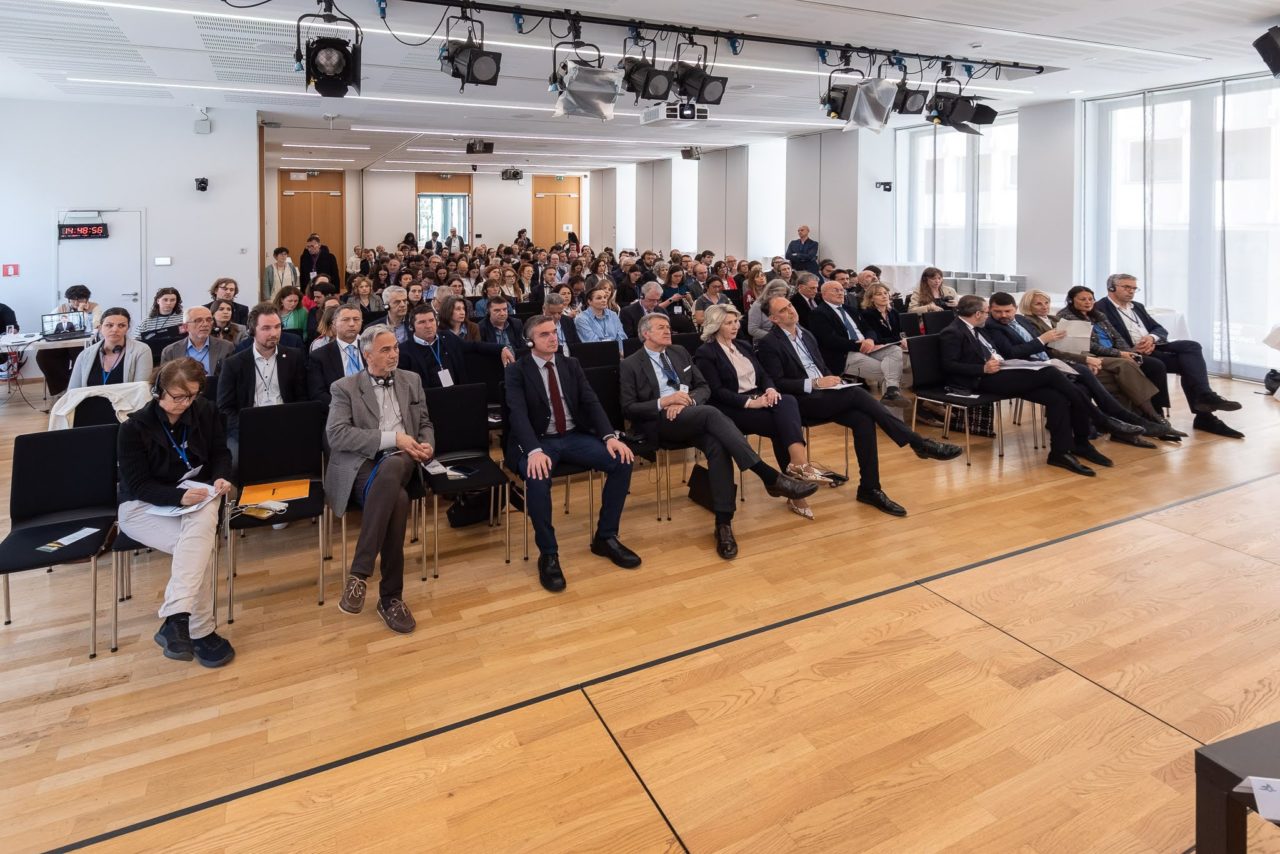
After three years, the AREPO European Event on Quality and Origin Products returned for its sixth edition on 23 April 2026 at the Common House of Hessen, Emilia-Romagna, Nouvelle-Aquitaine and Wielkopolska. Organised in collaboration with the Horizon Europe project GI SMART, the event also marked the third meeting of the GI SMART EU MAP.
Over the years, this gathering has engaged EU Institutions, regional authorities, GI producers, and stakeholders in fruitful policy discussions on the importance of Geographical Indications (GIs) within the agri-food sector. In this edition, a high-level conference was followed by the sampling of GI products from 24 AREPO member regions. The tasting represented a key moment of discovery and territorial valorisation.
The conference – entitled “From research to action: guiding future EU policies to enhance territorial impacts of Geographical Indication” – was structured around two roundtables moderated by Ms. Juliane Schäfer (Key Account Manager, Givaudan & sixth generation winegrower, Weingut Klosterhof). Each session opened with a presentation from GI SMART bridging scientific evidence with policy debate. Building on this, speakers put forward concrete proposals to strengthen GIs’ contribution to regional socioeconomic development.
The meeting kicked off with a video message from the Executive Vice-President for Cohesion and Reform of the European Commission, Mr. Raffaele Fitto, who underlined that “Geographical indications are not a marginal part of our policies; they embody our European identity, drive economic growth, and act as a bridge between regions, communities, and global markets”. He reaffirmed the European Commission’s commitment to strengthening and promoting this heritage across Europe and worldwide. “Together, we can turn this momentum into a lasting impact for our regions and for future generation”.
Mr. Alessandro Beduschi, President of AREPO and Regional Minister for Agriculture, Food Sovereignty and Forestry of Lombardia followed with welcome remarks, recalling that “GIs are often called into question and subject to commercial pressures, which makes it all the more necessary to strengthen their recognition and protection. It is therefore essential to promote a shared approach that highlights their economic, cultural, and territorial significance”.
From Sustainability Practices to Consumer Perception
The first session opened with a scientific presentation by Dr. Matthew Gorton (Professor of Marketing, Newcastle University, GI SMART partner). The project identified 459 sustainable practices implemented in European GI systems showing that GI producers are doing more for sustainability than most consumers realise. To bridge this communication gap, the project developed the “World Café”, an innovative approach designed to foster dialogue between consumers and producers.
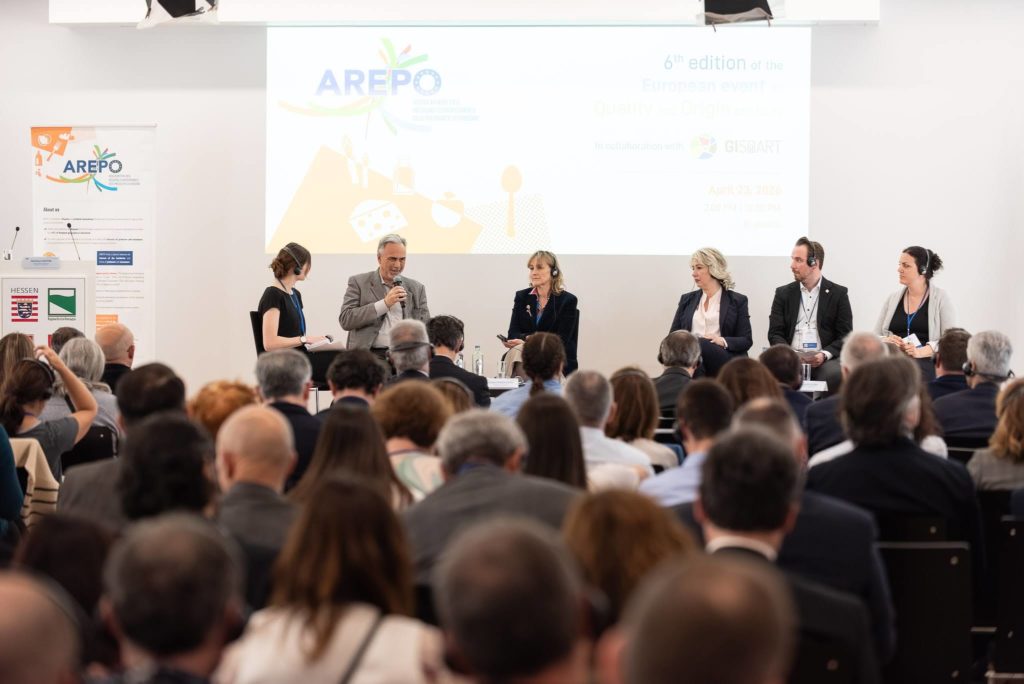
Mr. Luigi Tozzi (Deputy Director of SAFE, GI SMART partner) broke the ice in the second roundtable pointing out that consumers’ awareness varies across markets. While origin is increasingly valued, especially in certain markets, emerging and diverse consumer groups require targeted education and communication strategies. Ms. Cristina Rueda Catry (Head of Unit F.1 External Communication and Promotion Policy, DG AGRI, European Commission), recalled that promotion is a key objective of the GIs regulation and stressed the importance of continuous, demand-driven promotion programmes, including strong links with trade policy and export strategies. Ms. Katerina Zografou (Vice Governor of the Regional Unit of Halkidiki, Region of Central Macedonia) outlined regional efforts to connect GIs with tourism, gastronomy and scientific research, through partnerships with retailers and universities. Representing producers’ perspective, Mr. Klaus Hoffman, (Bayerisches Bier PGI, Münchener Bier PGI and Oktoberfestbier PGI) underlined that sustainability must be understood across its three dimensions – environmental, social and economic – emphasising the role of quality schemes in supporting local employment, family businesses and export competitiveness. Concluding the session, Ms. Julia De Castro (Project Manager, CNAOL) emphasised their communication effort targeting the 25-40 age group, whose trust in GI logos remains comparatively lower.
Public Policies, Territorial Development, and Geographical Indications
The scientific presentation by Dr. Armelle Mazé (Senior Researcher in Economics, INRAE, and lead partner of GI SMART) set the framework for the second panel’s discussion. She showcased the project’s work on identifying social, economic and environmental indicators to assess sustainability and inform public policy. The project also compares national strategies and institutional frameworks governing GIs in order to identify best practices and support a common EU approach.
The discussion then focused on how policies at EU, national and regional level can effectively support GIs and enhance their territorial impact, notably in view of the upcoming EU Action Plan on GIs and the CAP post-2027.
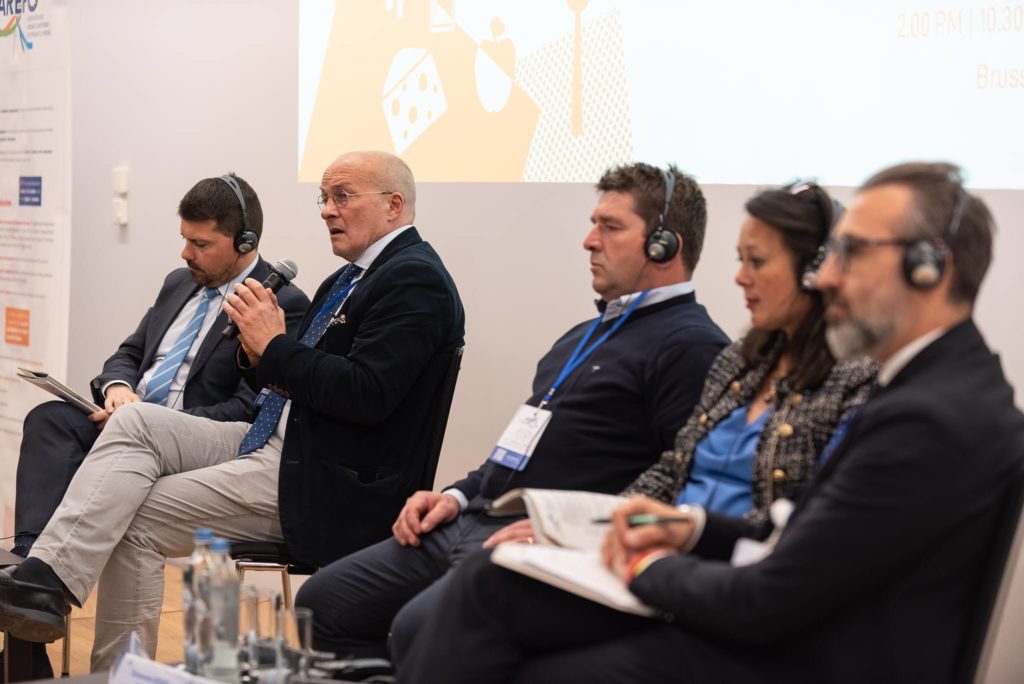
Mr. João Onofre (Head of Unit F.3 on Geographical Indications, DG AGRI, European Commission) drew attention to the strong economic value of GIs and confirmed the Commission’s commitment to deliver an Action Plan on GIs by 2027, while making clear that no additional budget will be allocated to support its implementation. Ms. Temanuata Girard (Treasurer of AREPO and Vice-President for Agriculture and Food of Centre-Val de Loire) stressed that attractiveness strategies should rely on collaborative schemes involving producers and their know-how. Mr. Alessio Mammi (Regional Minister for Agriculture and Agri-Food and Relations with the EU of Emilia-Romagna) advocated for strong rural development policies, an adequate CAP, and an ambitious Action Plan to preserve food diversity, and the cultural heritage of GIs. Mr. Francesco Paolicelli (Regional Minister for Agriculture and Rural Development of Puglia) underscored the strategic role of tourism in promoting GIs products and boosting regional economies. Mr. Charles Deparis (President of oriGIn EU and raw milk producer for “Pont-l’Évêque” PDO and “Camembert de Normandie” PDO) concluded the panel by calling for strong protection systems and policies that preserve authenticity and avoid excessive standardisation.
Conclusion and Inauguration of the GI Sampling
Mr. César Saldaña (Vice President of AREPO and President of the Conferencia Andaluza de DOP e IGP – CADO) delivered the final remarks calling for GIs to be integrated into the European Commission’s strategic approach to agricultural research and innovation, as demonstrated by GI SMART, through the definition of specific priorities aimed at reinforcing their contribution to the production of public goods. This was followed by a video message by MEP Carlo Fidanza, (Vice-Chair of the Intergroup on Wine, Quality Foodstuffs and Spirits of the European Parliament), who underscored the capacity of GIs to act as drivers of regional development and powerful lever for competitiveness. MEP Benoit Cassart, (Member of the Intergroup “Wine, Quality Foodstuffs and Spirits” of the European Parliament) highlighted GIs’ role as soft power tools, exerting a cross-cutting impact on territories through cooperation, local supply chains and sustainable practices. This message was echoed by MEP Herbert Dorfmann, (Member of the Intergroup on Wine, Quality Foodstuffs and Spirits, of the European Parliament) who reaffirmed the EP’s commitment to advancing policy legislation and international agreements that consistently safeguard European quality products.
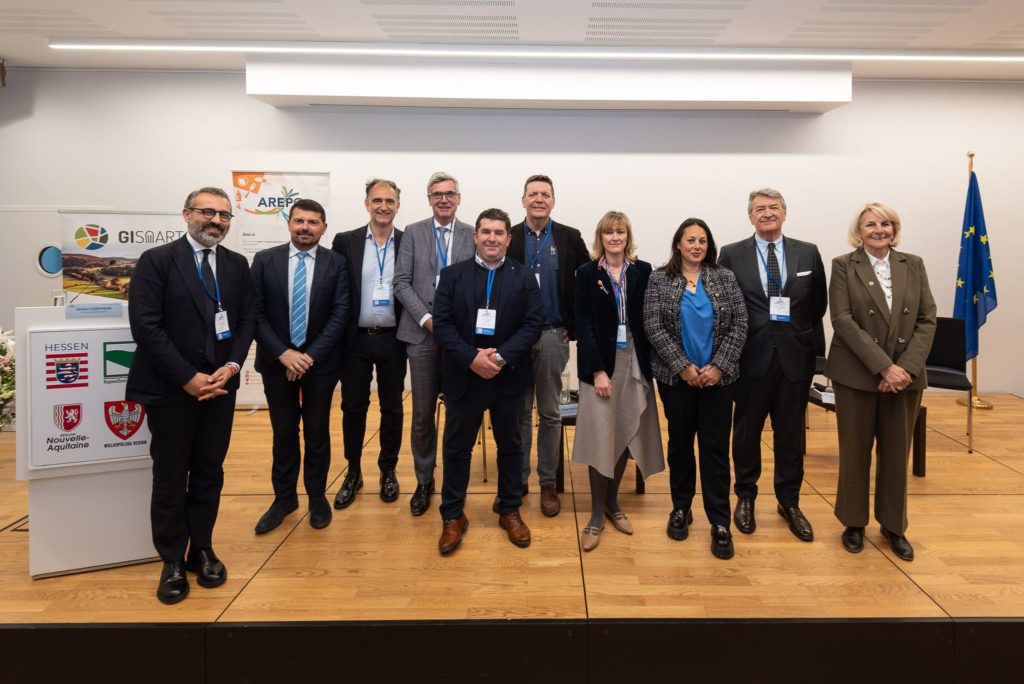
Then, Mr. Alessandro Beduschi (AREPO President), Ms. Temanuata Girard (AREPO Treasurer), Benoit Cassart and Herbert Dorfmann (MEPs), Mr. João Onofre and Ms. Cristina Rueda Catry (European Commission), officially opened the tasting of quality and origin products from AREPO member Regions.
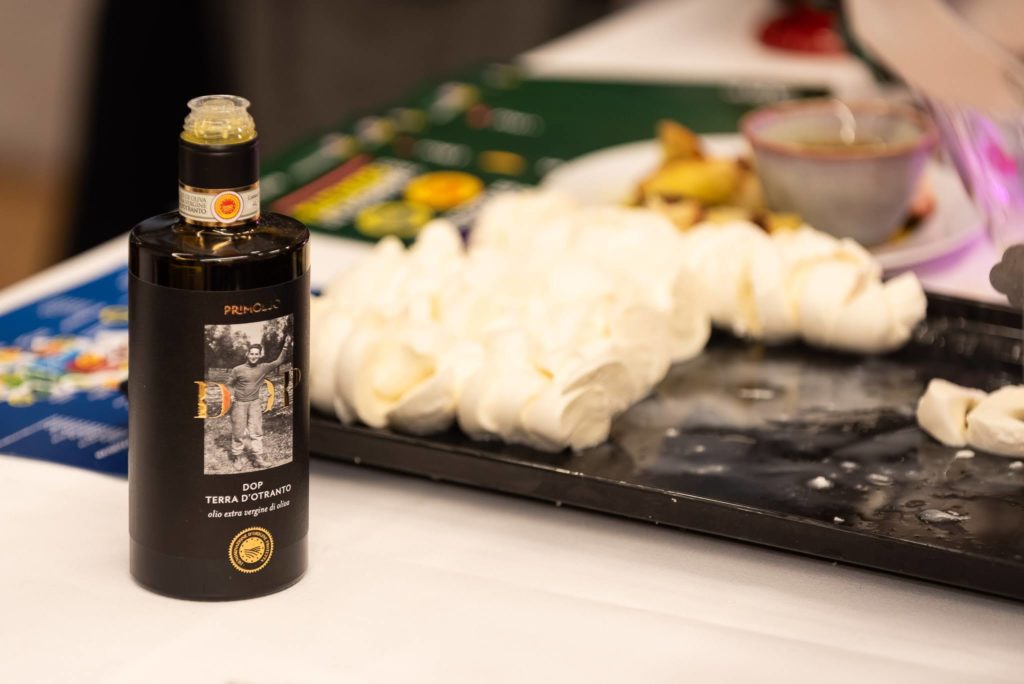
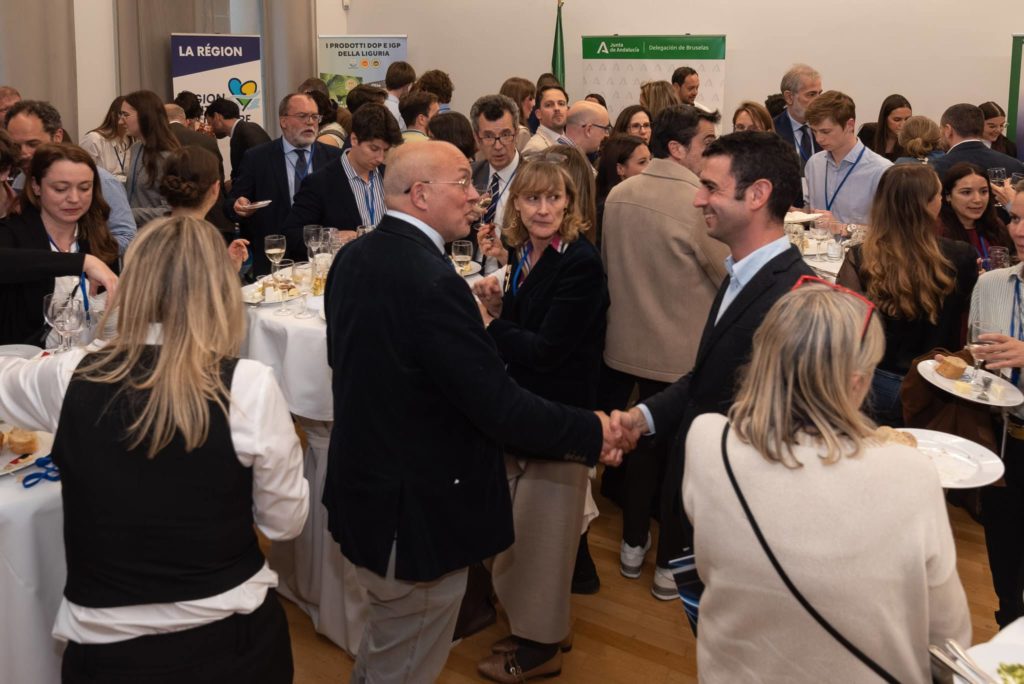
The tasting once again proved to be a centrepiece of the event, attracting strong participation and interest from institutional representatives and stakeholders alike. Bringing together a wide diversity of GI products, it fostered direct exchange with producers and reinforced the event’s core objective: advancing the value of GIs for regional development and the agri-food sector.
Photos – Copyright © Eric Berghen